
.webp)
CORRECTIVE JAW SURGERY
Torrance, CA
Specialist evaluation and coordinated planning for jaw alignment concerns that affect bite, chewing, speech, airway, or facial balance.
What Is Corrective Jaw Surgery?
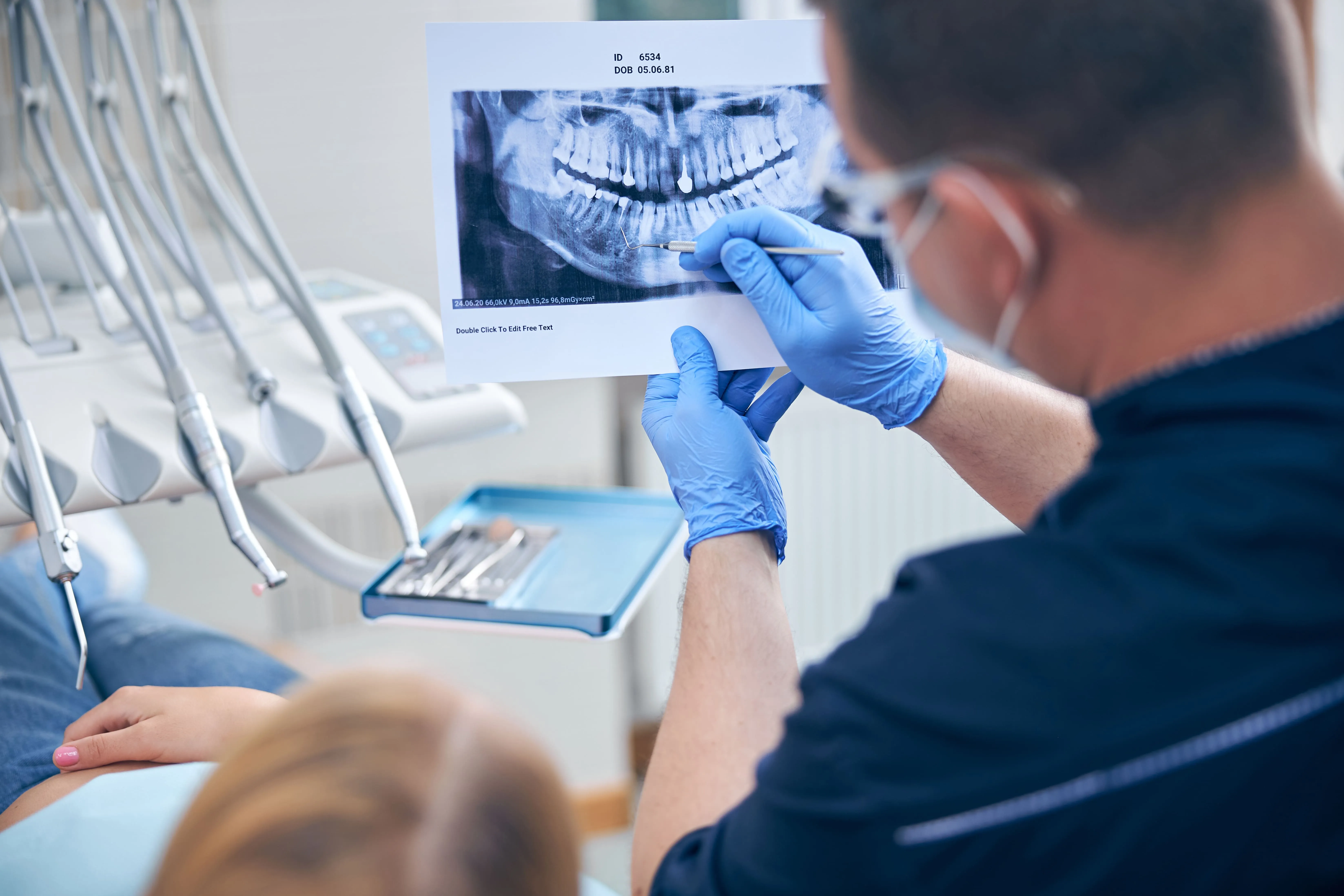
Corrective jaw surgery, also called orthognathic surgery, repositions the upper jaw, lower jaw, chin, or a combination of these structures when skeletal alignment cannot be corrected with orthodontics alone.
Treatment is usually planned with an oral and maxillofacial surgeon and orthodontist. It may include orthodontics before and after surgery, three-dimensional records, a hospital or surgical-facility procedure, and a structured recovery period.
WHO BENEFITS FROM CORRECTIVE JAW SURGERY?

Evaluation may be appropriate when jaw growth or skeletal alignment causes a significant functional problem that cannot be predictably corrected with dental treatment alone.
Patients with significant bite discrepancies Severe underbite, overbite, open bite, or crossbite may interfere with chewing, speech, tooth wear, or long-term dental stability.
Patients with chewing or speech difficulty. Skeletal jaw position can make biting, chewing, lip closure, or clear speech more difficult.
Patients with facial asymmetry or prior injury. Uneven growth, congenital differences, or trauma can affect both function and facial balance.
Selected patients with airway concerns. Jaw position can contribute to breathing problems, but candidacy requires coordinated airway, sleep, orthodontic, and surgical evaluation.
THE BENEFITS OF CORRECTIVE JAW SURGERY
When appropriately indicated, coordinated jaw surgery can improve bite function, chewing efficiency, skeletal balance, and long-term alignment.

Improve Bite and Chewing Function
Repositioning the jaws can help the teeth meet more effectively and improve chewing when skeletal alignment is the underlying problem.
Support Long-Term Skeletal Balance
A coordinated surgical and orthodontic plan addresses jaw position rather than moving teeth alone to compensate for a severe discrepancy.
Coordinate Function and Facial Balance
Planning considers bite, speech, facial symmetry, airway concerns, and the patient's goals together.
THE CORRECTIVE JAW SURGERY PROCESS
Orthognathic treatment is a coordinated, multi-stage process involving surgical diagnosis, orthodontic preparation, a hospital or surgical-facility procedure, and guided recovery.
BOOK NOWStep 1: Surgical and Orthodontic Evaluation
Records, examination, photographs, and three-dimensional imaging define the skeletal problem and treatment goals.
Step 2: Coordinated Treatment Planning
Dr. Chen and the orthodontist plan tooth movement, jaw positioning, surgical setting, timing, alternatives, and risks.
Step 3: Surgery and Early Recovery
The planned jaw procedure is completed in an appropriate surgical setting, followed by close monitoring, diet changes, and activity restrictions.
Step 4: Healing and Orthodontic Finishing
Bone healing and bite stability are monitored while orthodontic treatment refines the final tooth position.
WHY CHOOSE SOUTH BAY DENTAL LOFT FOR CORRECTIVE JAW SURGERY
.webp)
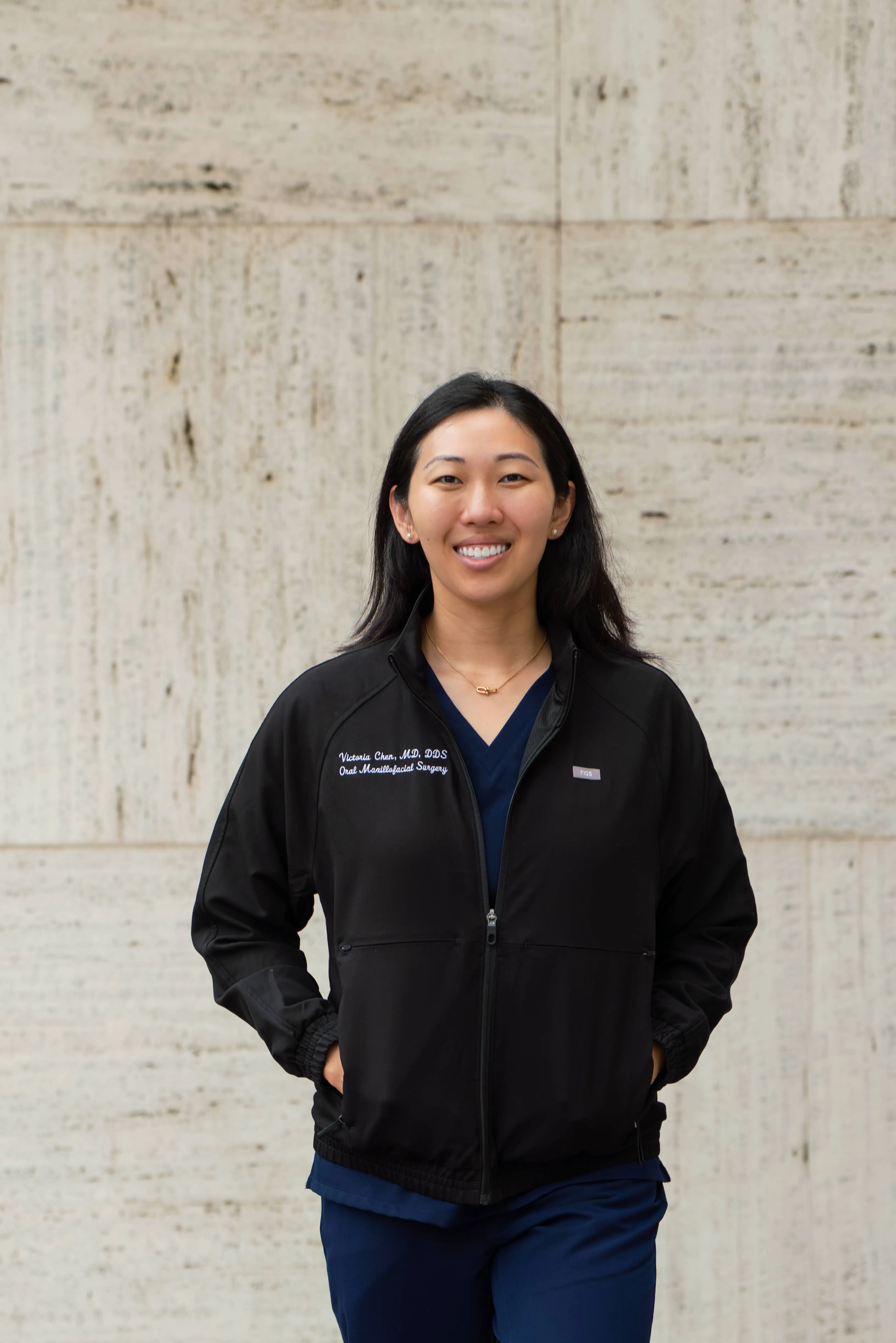
Dr. Victoria Chen completed UCLA's six-year oral and maxillofacial surgery residency, with training in corrective jaw surgery, facial reconstruction, trauma, and hospital-based surgical care.
Her dual dental and medical training supports three-dimensional diagnosis, risk assessment, and coordination with orthodontists and other specialists throughout a complex treatment plan.
South Bay Dental Loft provides a familiar point of contact for evaluation and follow-up while Dr. Chen coordinates the surgical setting, orthodontic timing, and recovery milestones required for your case.
Frequently Asked Questions (FAQs)
Common questions about Corrective Jaw Surgery in Torrance, CA
No. It is commonly used to address functional problems involving bite, chewing, speech, skeletal asymmetry, or selected airway concerns. Appearance may also change.
Most patients need orthodontic treatment before and after surgery to position the teeth for the corrected jaw relationship.
Corrective jaw surgery is generally performed in a hospital or appropriately equipped surgical facility, not as a routine dental-office procedure.
Initial swelling and activity limits are greatest in the first weeks, while bone healing continues for several months. Timing varies by procedure and patient.
Risks vary by procedure and can include bleeding, infection, altered sensation, bite changes, relapse, hardware problems, and the need for additional treatment.
Have more questions?
Contact our office to speak with Dr. Chen about corrective jaw surgery evaluation, coordination, and next steps.
Experience dentistry reimagined with luxurious amenities, a relaxing spa-like atmosphere, and a dedicated team committed to your beautiful, healthy smile.
Get in Touch
Simple secure and safe free parking located on-site.
Phone
Call us now!
Address
Get directions
3610 Lomita Blvd #203
Torrance, CA 90505
Hours
Mon - Thu
8:00am - 5:00pm
Fri - Sun
Closed

.webp)