

Quick answer: For hypersensitive teeth, start by brushing twice a day with a desensitizing toothpaste, brushing gently, and cutting back on acidic food and drinks. If the pain is sharp in one tooth, lingers, or keeps coming back, see a dentist. Sensitivity can also signal a cavity, crack, leaking filling or gum recession.
It usually happens at the worst moment.
You take a sip of iced coffee, or bite into ice cream, and a sharp zing shoots through a tooth. It is gone in a second or two. Then it happens again the next morning when you brush.
So you start chewing on one side. You let drinks warm up. You wonder if something is wrong.
The simple answer is that sensitive teeth are very common, and a good sensitivity toothpaste helps many people.
The more honest answer is that sensitivity is a symptom, not a diagnosis. Sometimes it is just exposed tooth surface reacting to cold. Sometimes it is a cavity, a cracked tooth or a filling that has started to leak. A toothpaste can quiet the first. It won't fix the others.
Here is how to tell the difference, and what actually helps.
Why Are My Teeth So Sensitive?
Healthy teeth have protection built in. Enamel covers the crowns of your teeth, and your gums cover the roots.
Under your enamel and gums is a layer called dentin. It is full of tiny fluid-filled tubes that lead toward the nerve inside the tooth.
When dentin is exposed, cold, air, sweets or touch can move the fluid in those tubes. The nerve reads that movement as a short, sharp pain (Canadian Advisory Board on Dentin Hypersensitivity, 2003).
Dentists call this dentin hypersensitivity. It is defined as a quick, sharp pain from exposed dentin that can't be explained by another dental problem (Canadian Advisory Board on Dentin Hypersensitivity, 2003).
Dentin usually becomes exposed in two ways:
- Gum recession: the gum pulls back and uncovers the root surface, which has no enamel.
- Enamel wear: acids from food, drinks or reflux, and heavy brushing, slowly thin the outer layer.
In a study of more than 3,000 young adults in seven European countries, 41.9% reported pain when their teeth were tested with a cold air stimulus, and sensitivity was linked to acid wear and gum recession (West et al., 2013).
So if your teeth are sensitive, you are far from alone.

Is Tooth Sensitivity a Sign of Something Worse?
Sometimes. That is why dentists treat sensitivity as a diagnosis of exclusion: other causes get ruled out first (Canadian Advisory Board on Dentin Hypersensitivity, 2003).
Problems that can feel just like ordinary sensitivity include (Canadian Advisory Board on Dentin Hypersensitivity, 2003):
- A cavity
- A cracked or chipped tooth
- A broken or leaking filling
- Inflamed gums
- Sensitivity after a recent filling or crown
- Inflammation of the nerve inside the tooth (pulpitis)
A few patterns point away from simple sensitivity:
- Pain in one specific tooth, especially when you bite down
- Pain that lingers for more than a few seconds after the cold is gone
- Pain that wakes you up or throbs on its own
- Swelling, a bad taste or a pimple on the gum
Those are reasons to get checked soon. Swelling or severe pain is a reason for an emergency dental visit.

Why Are My Teeth Suddenly Sensitive?
Sensitivity that appears out of nowhere usually has a recent trigger. Common ones include:
- Recent whitening, from a dentist or a store kit
- New dental work, since some sensitivity after a filling or crown is common (Canadian Advisory Board on Dentin Hypersensitivity, 2003)
- A new or growing cavity
- A crack from biting something hard or from clenching (Canadian Advisory Board on Dentin Hypersensitivity, 2003)
- A change in habits, such as more sparkling water, citrus, sports or energy drinks, or new reflux (West et al., 2013)
- Gum changes, where recession has just uncovered a root
If you can link the sensitivity to whitening or a new filling, give it a little time. If you can't, or it is limited to one tooth, have it checked.
What Can I Do About Sensitive Teeth at Home?
For everyday sensitivity, home care is the right place to start (Canadian Advisory Board on Dentin Hypersensitivity, 2003).
1. Switch to a desensitizing toothpaste
A large network analysis of clinical trials found that several sensitivity toothpaste ingredients worked better than regular fluoride toothpaste, including stannous fluoride, potassium salts, arginine and calcium sodium phosphosilicate (Martins et al., 2020).
Use it to brush at least twice a day. That is the method with clinical support; dabbing it on a tooth has no published evidence behind it (Canadian Advisory Board on Dentin Hypersensitivity, 2003).
These toothpastes take regular use to work, and the benefit fades if you stop (Marto et al., 2019).
2. Brush gently
Overly frequent or aggressive brushing can add to wear and recession. Use a soft brush and light pressure (Canadian Advisory Board on Dentin Hypersensitivity, 2003).
3. Watch the acids
Sensitivity has been linked with acidic diets, energy drinks, heartburn or reflux, and vomiting (West et al., 2013). Cutting back on sipping acidic drinks through the day helps protect what enamel you have.
Brushing before meals rather than right after acidic food is one practical tip (Canadian Advisory Board on Dentin Hypersensitivity, 2003).
If home care hasn't helped after a few weeks, it's time for an exam.
The Biggest Difference: Treating the Cause, Not Just the Zing
A sensitivity toothpaste works on the symptom. It helps block or calm the exposed tubes.
But the starting point recommended by experts is removing what's causing the exposure in the first place (Canadian Advisory Board on Dentin Hypersensitivity, 2003).
That changes the plan:
- If acid is the cause, the fix is in your diet and habits, or in managing reflux with your physician.
- If recession is the cause, protecting the gums matters, and sometimes covering the root.
- If a filling is leaking or a tooth is cracked, the tooth needs repair, not toothpaste.
Think of it like a leaky roof. A bucket under the drip helps today, but the roof still needs fixing. Toothpaste is the bucket. Repairing the tooth, protecting the gums or changing the acid habit is the roof.
It also explains why two people with the same complaint can leave with different plans. One needs a new toothpaste and a softer brush. The other needs a cracked filling replaced.
That is the difference between masking sensitivity and solving it.
What Can a Dentist Do for Sensitive Teeth?
When home care isn't enough, or you want faster relief, in-office treatment is the next step.
A systematic review found that only in-office treatments reduced sensitivity right away, while at-home products also helped over the longer term (Marto et al., 2019). Effective in-office options included sealing agents, glass ionomer coatings, bonding materials and laser treatment (Marto et al., 2019).
Depending on the cause, treatment can also include:
- Repairing a cavity or worn area with a tooth-colored filling
- Gum disease treatment and gum grafting when recession has exposed the roots
- A custom night guard or custom oral appliance if clenching or grinding is part of the picture
- As a last resort for severe, persistent pain, root canal therapy (Canadian Advisory Board on Dentin Hypersensitivity, 2003)

Here is how the main options compare.
| Option | At-home toothpaste | In-office treatment | Fixing the cause |
|---|---|---|---|
| Best for | Mild, widespread sensitivity to cold or air | Sensitivity that needs faster relief or didn't respond to toothpaste | Recession, wear, cavities, cracks or leaking fillings |
| How fast it helps | Gradually, with daily use | Often right away | Depends on the repair |
| How long it lasts | As long as you keep using it | May need repeating over time | Longest, because it addresses the source |
| Main limit | Doesn't treat an underlying problem | Treats the surface, not the cause | More involved, and may cost more |
Why Are My Teeth Sensitive After Whitening?
Whitening is one of the most common reasons for a sudden spell of sensitivity.
A 2019 review noted that studies report sensitivity in about 63% of people after in-office bleaching and about 51% after at-home bleaching (Rezende et al., 2019).
With professional teeth whitening at our office, Dr. Gloria Luong may recommend a desensitizing toothpaste or adjust your treatment schedule to keep you comfortable. Any temporary sensitivity typically resolves within 24 to 48 hours.
If you already have sensitive teeth, say so before you start whitening. It changes the plan.
How Long Does Tooth Sensitivity Last?
It depends on the cause.
- After whitening: usually short-lived. With our whitening, it typically resolves within 24 to 48 hours.
- After a new filling or crown: often settles as the tooth adjusts. If it doesn't, the bite or the restoration may need a check (Canadian Advisory Board on Dentin Hypersensitivity, 2003).
- From recession or enamel wear: this kind tends to stick around. It can be controlled well, but it usually needs ongoing care rather than a one-time fix (Marto et al., 2019).
Sensitivity that keeps getting worse is never something to just wait out.
What We Look at Before Recommending Treatment for Sensitive Teeth
At South Bay Dental Loft in Torrance, Dr. Luong starts by finding out why your teeth are sensitive before treating them, for patients from across the South Bay. That means looking at:
- Which teeth and which triggers: cold, sweets, air, biting or touch
- Gums: recession, inflammation and pocket depths
- Enamel: signs of acid wear or grinding
- Each sensitive tooth: checked for cavities, cracks and failing fillings, using our intraoral camera and digital x-rays
- Your habits: diet, brushing, whitening and any reflux or clenching
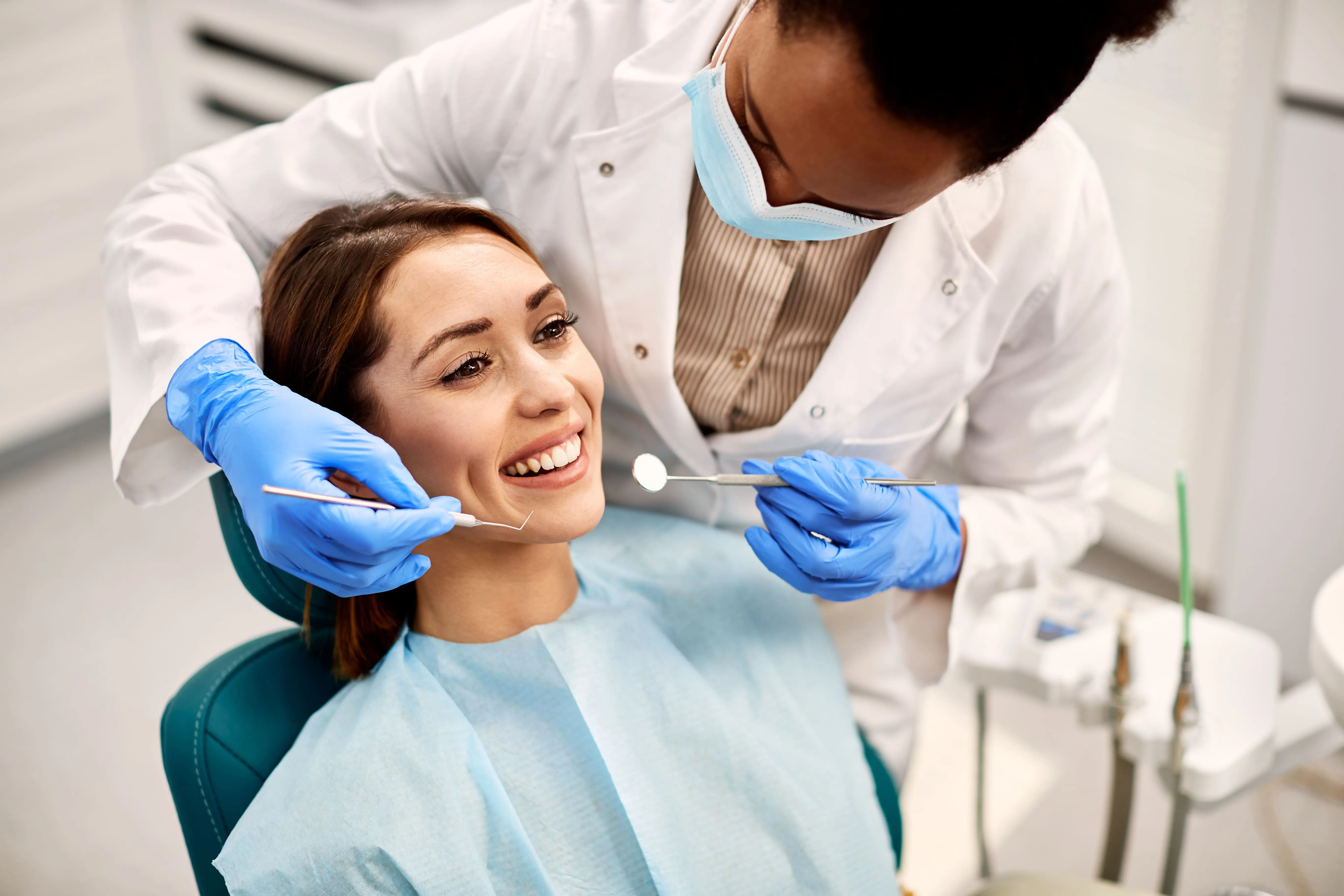
That exam decides whether you need a toothpaste and a few habit changes, an in-office treatment, or a repair.
Risks and Limits of Sensitivity Treatments
- Toothpaste only works while you use it. Stop, and sensitivity often returns (Marto et al., 2019).
- In-office treatments treat the surface. They may need repeating, and they won't stop ongoing recession or acid wear.
- Gum grafting is surgery, with healing time, and isn't needed for every case of recession.
- Some pain isn't true sensitivity. If pain persists after treatment, the diagnosis should be revisited, since it can come from the gums, nerves or a referred source (Canadian Advisory Board on Dentin Hypersensitivity, 2003).
How Much Does Treating Sensitive Teeth Cost?
Often, not much. Many people do well with a sensitivity toothpaste from the store.
When you need more, cost depends on the cause. For reference, our listed fees without insurance include:
- New patient exam with x-rays: $150 to $350
- Tooth-colored fillings: $150 to $450
- Porcelain crown: $1,000 to $2,000 per crown
Most people need only one of these, if any. The exam is what tells you which, so you are not paying for treatment you don't need.
We accept most PPO dental plans, verify your benefits and file claims for you. In-house financing, CareCredit and Sunbit are available, and our membership plan includes discounts on most services. Details are on our Insurance & Financing page.
Final Takeaways
- Sensitive teeth are common, and usually come from exposed dentin.
- Start with a desensitizing toothpaste, used twice daily, plus gentle brushing and fewer acidic drinks.
- Pain in one tooth, pain that lingers, or pain on biting can mean a cavity, crack or failing filling.
- In-office treatments work faster; toothpaste works over time.
- The longest relief comes from treating the cause: recession, wear or a damaged tooth.
- Whitening sensitivity is common and usually short-lived.
Tired of avoiding cold drinks? A focused exam will show whether you need a toothpaste, a treatment or a repair. New to our office? Start with a new patient exam, or call (310) 373-9701.
Research References
- Canadian Advisory Board on Dentin Hypersensitivity. Consensus-based recommendations for the diagnosis and management of dentin hypersensitivity. J Can Dent Assoc. 2003;69(4):221-226. https://jcda.ca/sites/default/files/back_issues/vol-69/issue-4/221.pdf
- Martins CC, Firmino RT, Riva JJ, et al. Desensitizing toothpastes for dentin hypersensitivity: a network meta-analysis. J Dent Res. 2020;99(5):514-522. https://doi.org/10.1177/0022034520903036
- Marto CM, Baptista Paula A, Nunes T, et al. Evaluation of the efficacy of dentin hypersensitivity treatments: a systematic review and follow-up analysis. J Oral Rehabil. 2019;46(10):952-990. https://doi.org/10.1111/joor.12842
- Rezende M, Coppla FM, Chemin K, Chibinski AC, Loguercio AD, Reis A. Tooth sensitivity after dental bleaching with a desensitizer-containing and a desensitizer-free bleaching gel: a systematic review and meta-analysis. Oper Dent. 2019;44(2):E58-E74. https://doi.org/10.2341/17-253-L
- West NX, Sanz M, Lussi A, Bartlett D, Bouchard P, Bourgeois D. Prevalence of dentine hypersensitivity and study of associated factors: a European population-based cross-sectional study. J Dent. 2013;41(10):841-851. https://doi.org/10.1016/j.jdent.2013.07.017