
Quick answer: Consider removing your wisdom teeth if they are impacted, only partly through the gum, hard to clean, or already causing pain, infection, deep gum pockets or damage to the molar next to them. Healthy, fully erupted wisdom teeth you can clean well may only need monitoring. If removal is likely, earlier is usually easier.
It usually starts with an X-ray, not a toothache.
You sit down for a checkup, the dentist turns the screen toward you, and there they are: two lower wisdom teeth lying almost sideways in the jaw, pressed against the back molars.
Nothing hurts. You chew fine. So the first question is the obvious one.
Why would I take out teeth that aren't bothering me?
The simple answer is that wisdom teeth often cause problems you can't feel yet, and they are easier to remove before those problems start.
The more honest answer is that it depends on your teeth. Some wisdom teeth come in straight, stay healthy and never need surgery. Others sit trapped in bone for years and quietly damage the tooth next door. Even the best research can't give one rule for everyone, which is why the decision should come from your own exam and imaging, not from a blanket age or a scare.
Here is how to think it through.
Why Do Wisdom Teeth Cause So Many Problems?
Wisdom teeth, or third molars, are the last teeth to come in, usually in the late teens or early twenties. By then, there often isn't enough room at the back of the jaw.
When a tooth can't come in fully, it is called impacted. It may stay under the gum, under bone, or break through only partway.
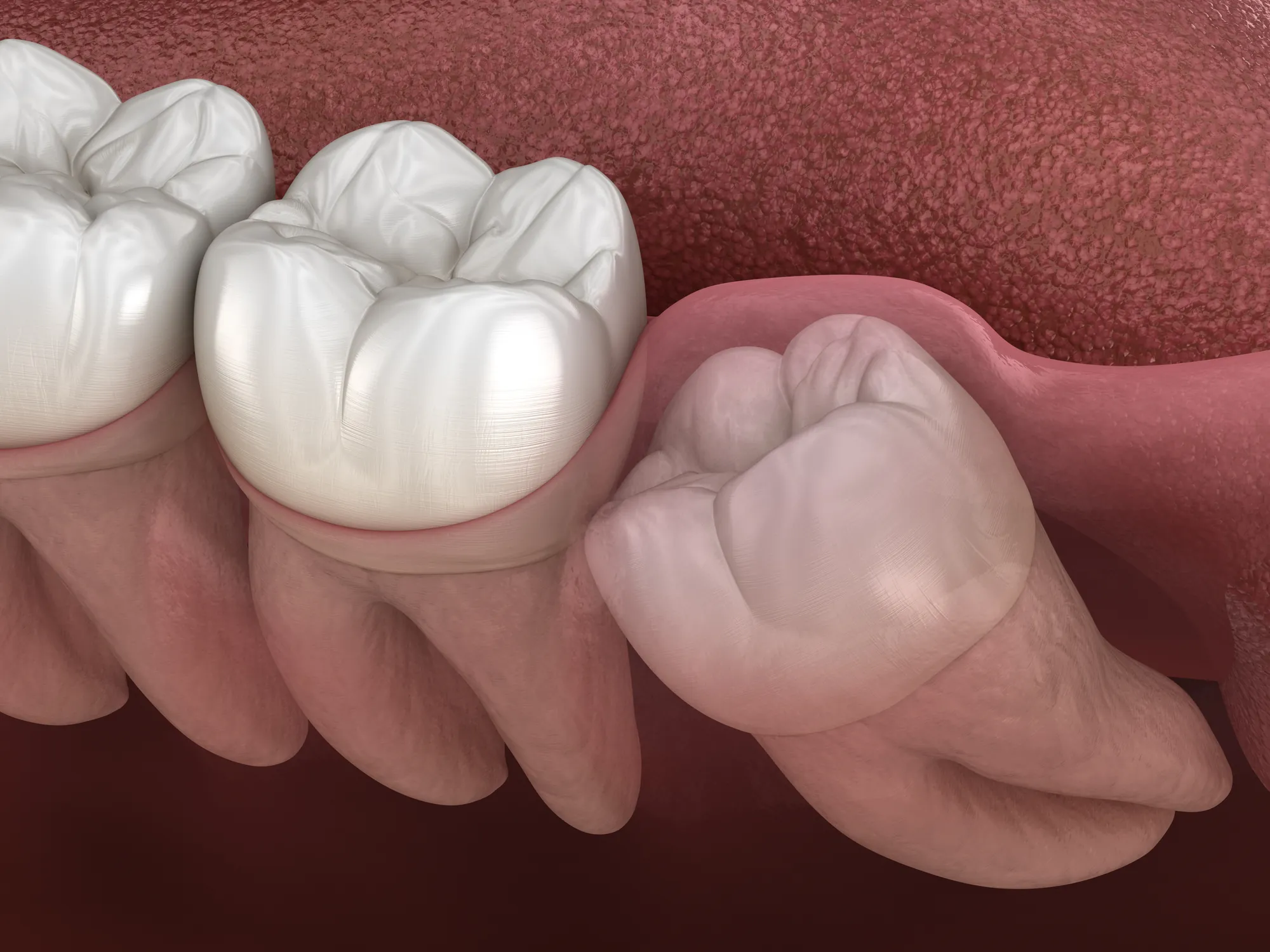
A partly erupted tooth leaves a flap of gum over it. Food and bacteria collect under that flap, and the gum can become infected. This infection, called pericoronitis, most often affects lower wisdom teeth and is most common between ages 16 and 30 (Wehr et al., 2019).
A tilted tooth can also press against the back of the second molar, creating a spot you can't brush or floss. That is where cavities and gum pockets tend to start.
What Are the Signs Your Wisdom Teeth Should Come Out?
Sometimes your mouth tells you. Signs worth getting checked include:
- Pain, pressure or tenderness behind your last molar
- Swollen or bleeding gum over a tooth that is only partly through
- A bad taste or bad breath that keeps coming back from the back of the mouth
- Jaw stiffness or trouble opening wide
- Food that always gets stuck in the same spot behind the back molar
- Swelling of the cheek or jaw, or fever with tooth pain
Repeated flare-ups of gum infection around a partly erupted wisdom tooth are a common reason surgeons recommend removal (Wehr et al., 2019).
Swelling with fever or trouble swallowing is not a wait-and-see problem. Call right away.
Should I Get My Wisdom Teeth Removed If They Don't Hurt?
Not automatically. But no pain does not mean no problem.
Research summarized by the University of Washington School of Dentistry notes that about 25% of people who consider their wisdom teeth symptom-free already have inflammatory gum disease around them (University of Washington School of Dentistry, n.d.). The same review cites long-term follow-up in which the chance of eventually needing removal passed 70% after 18 years.
A study of adult men followed over many years found that keeping wisdom teeth was linked to a higher risk of problems in the neighboring second molar (Nunn et al., 2013).
At the same time, a Cochrane review, one of the most rigorous forms of evidence summary, found there isn't enough high-quality evidence to say whether healthy, symptom-free impacted wisdom teeth should be removed or kept (Ghaeminia et al., 2020). Its advice: decide with your surgeon based on your own findings, and if you keep them, have them checked regularly.
So the real question isn't "Do they hurt?" It's "What do the exam and images show?"
The Biggest Difference: Your Age When They Come Out
If your wisdom teeth are likely to need removal at some point, timing matters more than most people expect.
In a study of more than 1,500 wisdom tooth extractions, age was one of the significant risk factors for complications (Bui et al., 2003). Younger patients generally have softer bone and roots that are not fully formed, which can make surgery simpler (Blondeau & Daniel, 2007).
Nerve injury is the complication people worry about most. A review of recent studies put the rate of lower lip or chin numbness after lower wisdom tooth removal at roughly 0.35% to 8.4%, said permanent injury is very rare, and listed being older than 24 as one of the factors that may raise the risk (Sarikov & Juodzbalys, 2014).
In another series of 550 lower wisdom teeth, every case of permanent numbness occurred in a patient over 24, and the authors recommended removal, when it is indicated, well before that age (Blondeau & Daniel, 2007).
That does not mean everyone should have wisdom teeth out at 17.
It means that if your teeth are already heading toward trouble, waiting usually doesn't make the surgery easier.
What Happens If You Don't Remove Wisdom Teeth?
Many people keep their wisdom teeth for life without issues. When problems do develop, these are the most common:
- Gum infection (pericoronitis): swelling, a bad taste, pain when biting, and sometimes trouble opening wide (Wehr et al., 2019).
- Damage to the second molar: decay or bone loss on the back of the tooth you need for chewing (Nunn et al., 2013).
- Deep gum pockets: gum disease behind the last molars that can progress quietly (University of Washington School of Dentistry, n.d.).
- Cysts or growths: uncommon, but possible. In nearly 10,000 removed impacted wisdom teeth, about 3.1% had an associated cyst or tumor, most of them cysts (Güven et al., 2000).
Some of these show up as a sudden flare that needs an emergency visit. Others only show up on imaging.
Do Wisdom Teeth Cause Crowding of the Front Teeth?
This is one of the most common reasons people give for removing wisdom teeth, and the evidence doesn't support it.
A systematic review found that most studies do not show a cause-and-effect link between lower wisdom teeth and crowding of the front teeth, and concluded that removing them only to prevent crowding or relapse after braces is not justified (Zawawi & Melis, 2014). A trial included in the Cochrane review also found removal may make no significant difference to crowding after five years (Ghaeminia et al., 2020).
If crowding is your only concern, ask about retainers, not surgery.
Should You Remove Wisdom Teeth or Keep Watching Them?
Here is how the two paths usually compare.
Neither path is "safe" by default. The right one depends on what your teeth are doing.
If You Decide to Keep Them
Keeping wisdom teeth is a reasonable choice when they are healthy. It just needs to be an active choice, not a forgotten one.
That means regular exams with gum measurements behind the last molars, and periodic X-rays to check the tooth, the bone and the molar in front of it. The Cochrane review specifically advises regular monitoring when symptom-free wisdom teeth are kept (Ghaeminia et al., 2020).
If anything changes, such as a new pocket, a cavity on the second molar or a first bout of infection, the plan can change with it.
What We Look at Before Recommending Wisdom Teeth Removal
At South Bay Dental Loft in Torrance, wisdom teeth are evaluated by Dr. Victoria Chen, our oral and maxillofacial surgeon, for patients from across the South Bay. A recommendation starts with these questions:
- Position: Is the tooth upright, tilted, or lying sideways? Is it under gum, under bone, or partly through?
- Room to come in: Is there enough space for it to erupt and be cleaned?
- The neighbor: Is there decay, bone loss or a pocket on the back of the second molar?
- Roots and nerve: How developed are the roots, and how close are they to the nerve that supplies feeling to the lip and chin?
- Gum health: Any swelling, infection or deep pockets around the tooth?
- You: Your symptoms, age, health history, medications, and how you feel about surgery and anesthesia.
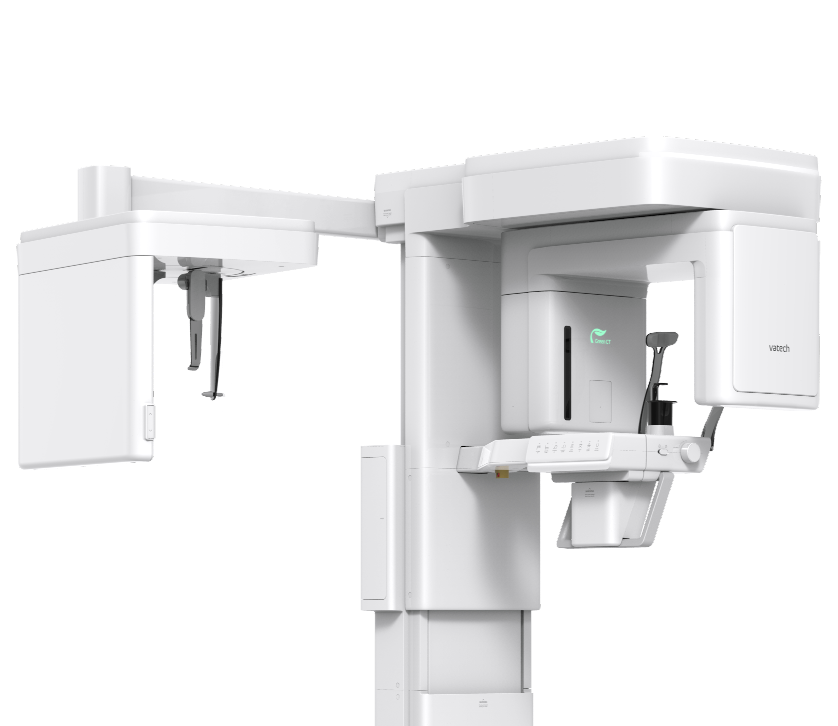
Our office uses 3D CBCT imaging with a Vatech Green X, which shows teeth, bone and nerves in three dimensions. For a lower wisdom tooth close to the nerve, that view helps plan the safest approach.
If removal makes sense, Dr. Chen walks you through which teeth, the surgical approach, comfort options and recovery. Options range from local anesthesia to IV sedation or general anesthesia. A deeply impacted tooth may be handled as a complex extraction.
If your teeth look healthy, the plan may simply be to keep watching them at each routine dental exam.
What Are the Risks of Wisdom Teeth Removal?
Wisdom teeth removal is common, but it is still surgery. The main risks to know about:
- Swelling, soreness and jaw stiffness: expected for the first several days. Many patients return to routine, non-strenuous activity within several days.
- Dry socket: the blood clot is lost before the socket heals, causing pain a few days later. It is reported in about 3% to 4% of extractions overall and more often after impacted lower wisdom teeth; smoking is one known risk factor (Teshome, 2017).
- Nerve injury: numbness of the lip, chin or tongue. Uncommon, usually temporary, and permanent injury is very rare (Sarikov & Juodzbalys, 2014).
- Infection or bleeding: uncommon, and usually managed with follow-up care (Bui et al., 2003).
Your own risk depends on the tooth's position, how close it sits to the nerve, your age and your health. That is exactly what the consultation and imaging are for.
How Much Does Wisdom Teeth Removal Cost?
There isn't one price, because no two cases are the same. Cost depends on:
- How many teeth are removed
- Whether each tooth is erupted, under the gum, or in bone
- The imaging needed
- The type of anesthesia
You'll get a treatment plan with your estimate before anything is scheduled.
We accept most PPO dental plans, verify your benefits before the visit and file claims for you. In-house financing, CareCredit and Sunbit are available, and there is an in-house membership plan for patients without insurance. Details are on our Insurance & Financing page.
Final Takeaways
- No pain doesn't mean no problem. Many wisdom tooth issues are found on X-rays first.
- Impacted, partly erupted or hard-to-clean wisdom teeth are the most common reasons to remove them.
- Healthy, upright, cleanable wisdom teeth can often be kept, as long as they are monitored.
- If removal is likely, earlier tends to be easier, because complication risk rises with age.
- Wisdom teeth are not a proven cause of front-teeth crowding.
- 3D imaging shows how close the roots are to the nerve, which shapes the safest plan.
Not sure what your wisdom teeth are doing? A consultation with imaging will tell you whether they need to come out now, later, or not at all. Learn more about wisdom teeth removal with Dr. Chen, or call (310) 373-9701.
Request a wisdom teeth consultation
Research References
- Blondeau F, Daniel NG. Extraction of impacted mandibular third molars: postoperative complications and their risk factors. J Can Dent Assoc. 2007;73(4):325. https://jcda.ca/sites/default/files/back_issues/vol-73/issue-4/325.pdf
- Bui CH, Seldin EB, Dodson TB. Types, frequencies, and risk factors for complications after third molar extraction. J Oral Maxillofac Surg. 2003;61(12):1379-1389. https://pubmed.ncbi.nlm.nih.gov/14663801/
- Ghaeminia H, Nienhuijs MEL, Toedtling V, et al. Surgical removal versus retention for the management of asymptomatic disease-free impacted wisdom teeth. Cochrane Database Syst Rev. 2020;5:CD003879. https://doi.org/10.1002/14651858.CD003879.pub5
- Güven O, Keskin A, Akal UK. The incidence of cysts and tumors around impacted third molars. Int J Oral Maxillofac Surg. 2000;29(2):131-135. https://doi.org/10.1034/j.1399-0020.2000.290211.x
- Nunn ME, Fish MD, Garcia RI, et al. Retained asymptomatic third molars and risk for second molar pathology. J Dent Res. 2013;92(12):1095-1099. https://doi.org/10.1177/0022034513509281
- Sarikov R, Juodzbalys G. Inferior alveolar nerve injury after mandibular third molar extraction: a literature review. J Oral Maxillofac Res. 2014;5(4):e1. https://doi.org/10.5037/jomr.2014.5401
- Teshome A. The efficacy of chlorhexidine gel in the prevention of alveolar osteitis after mandibular third molar extraction: a systematic review and meta-analysis. BMC Oral Health. 2017;17:82. https://doi.org/10.1186/s12903-017-0376-3
- University of Washington School of Dentistry, Oral and Maxillofacial Surgery. Evidence-Based Management of Third Molar Teeth (presentation). n.d. https://dental.washington.edu/wp-content/media/oral-surgery/evidence_based_management_third_molars.pdf
- Wehr C, Cruz G, Young S, Fakhouri WD. An insight into acute pericoronitis and the need for an evidence-based standard of care. Dent J (Basel). 2019;7(3):88. https://doi.org/10.3390/dj7030088
- Zawawi KH, Melis M. The role of mandibular third molars on lower anterior teeth crowding and relapse after orthodontic treatment: a systematic review. Sci World J. 2014;2014:615429. https://doi.org/10.1155/2014/615429